
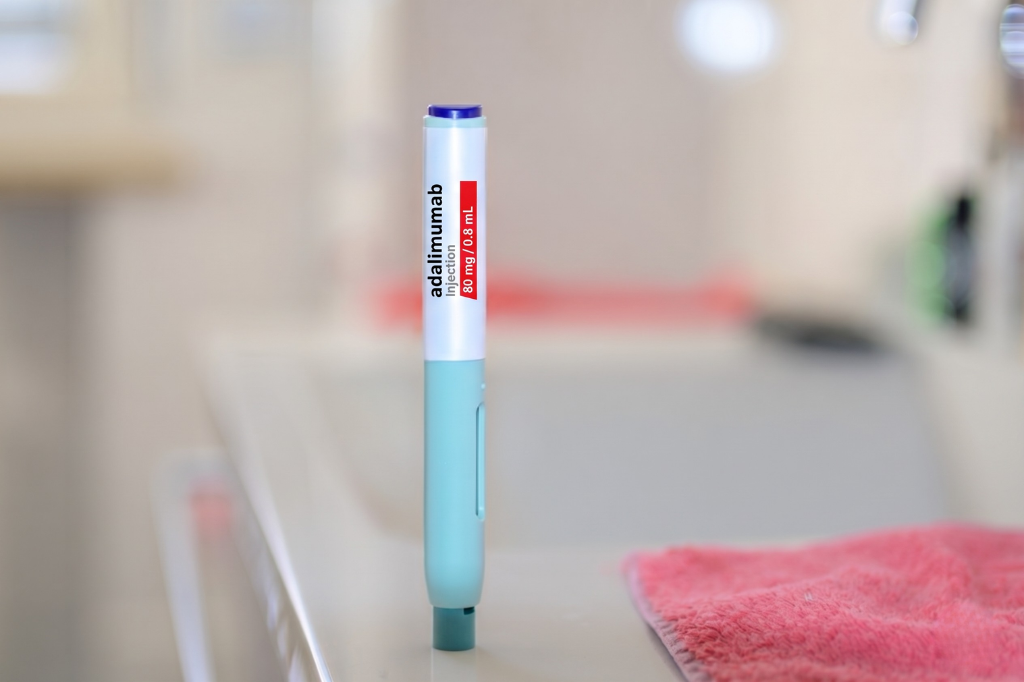
Adalimumab (ADM) is one of the most widely prescribed biologics in inflammatory disease, yet a substantial share of patients fail to reach or sustain remission. Up to half of patients on anti-TNF therapy experience secondary loss of response, and much of that failure is pharmacokinetic in origin rather than mechanistic. Variable drug clearance, subtherapeutic exposure, and anti-drug antibody (ADA) formation can quietly erode efficacy long before symptoms return.
With the launch of iDose® GEN7.0, Baysient now supports pharmacokinetic (PK)-informed therapeutic drug monitoring (TDM) for adalimumab. By combining Bayesian modeling with individual patient data, iDose helps clinicians estimate drug clearance and forecast the dose and interval needed to reach a physician-selected target, shifting adalimumab management from reactive adjustment toward proactive optimization.
Why Patients Lose Response to Adalimumab
For many patients, adalimumab delivers meaningful, durable disease control. For others, response fades, and the reasons are frequently tied to how quickly the drug is cleared.
Several factors have been associated with accelerated adalimumab clearance in patients with inflammatory bowel disease, including higher body weight, lower serum albumin, immunogenicity, prior biologic exposure, ulcerative colitis, elevated C-reactive protein (CRP), and elevated fecal calprotectin.
Immunogenicity is a particularly strong contributor: one study found the presence of anti-drug antibodies was associated with a roughly 4x increase in adalimumab clearance in patients with Crohn’s disease.
When clearance increases, exposure decreases. Patients with subtherapeutic concentrations are at greater risk of ADA formation, which further accelerates clearance and compounds the loss of response. Standard, fixed dosing does not account for this individual variability, which is why a PK-informed approach matters.
Adalimumab Clearance Predicts Outcomes, Sometimes More Clearly Than Trough Concentration
A cohort of 237 patients with Crohn’s disease offers a useful illustration. Median adalimumab clearance was lower in patients who achieved endoscopic remission than in those with persistent active disease (0.247 L/day versus 0.326 L/day). Notably, median drug concentration did not significantly distinguish the two groups (9.3 µg/mL versus 11.7 µg/mL).
In other words, clearance correlated with outcomes in cases where concentration alone did not. Across the outcomes studied, clearance performed at least as well as, and in some analyses better than, trough concentration. This reinforces a central premise of clearance-based monitoring: estimated clearance can serve as an informative PK marker of inflammatory burden and treatment trajectory, not just a number derived after a level is drawn.
This is especially relevant for a subcutaneous, frequently self-administered biologics like adalimumab. Clearance monitoring does not depend on precisely timed trough sampling and can operate with intermediate concentrations, which gives clinicians more flexibility in when samples are collected.
Proactive, PK-Guided Dosing Starts in Induction
The case for acting early, rather than waiting for symptoms, is well supported across anti-TNF therapy. In a real-world study of 180 pediatric and adult IBD patients, a Bayesian PK dashboard was used to guide infliximab dosing during induction, the period when inflammatory burden and drug clearance are typically highest. Dashboard-guided, proactive optimization was associated with improved drug durability and reduced immunogenicity, and nonadherence to the forecasted interval was an independent predictor of ADA development and treatment discontinuation.
That study evaluated infliximab, not adalimumab, but the principle generalizes across anti-TNF agents: when dosing is informed by individual PK early in treatment, clinicians can identify patients heading toward underexposure before response is lost. iDose brings that same proactive, model-informed logic to adalimumab.
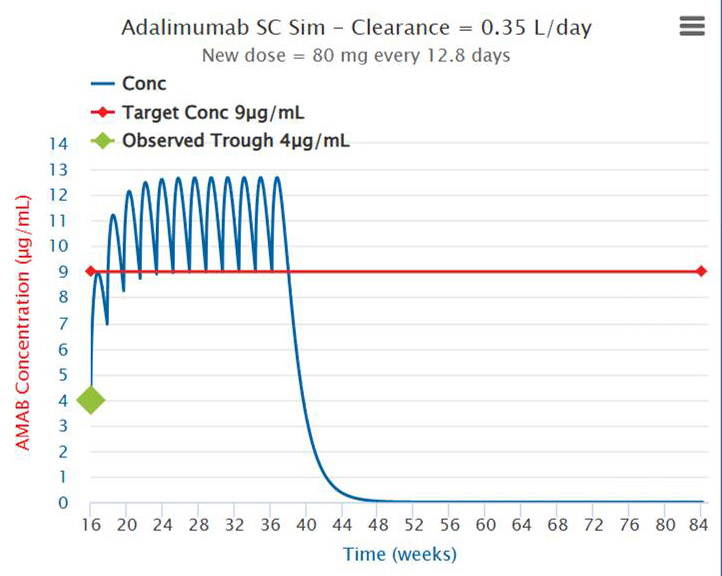
Simulated adalimumab trough concentration after a PK-informed dose adjustment, reflecting the gradual accumulation typical of subcutaneous dosing rather than the near-immediate attainment seen with IV infliximab.
Proactive TDM and Adalimumab: What the Evidence Suggests
Adalimumab-specific data points in the same direction. In a randomized controlled trial in pediatric Crohn’s disease, proactive TDM was associated with sustained corticosteroid-free clinical remission in 82% of patients, compared with 48% of patients managed with reactive TDM. Proactive monitoring was also associated with a higher composite outcome of sustained remission with normalized CRP and fecal calprotectin.
Findings like these support a simple idea: maintaining adequate exposure proactively, rather than reacting after a patient deteriorates, is associated with more durable disease control.
The Patient Populations Where This Applies
Adalimumab is approved across a broad range of inflammatory conditions, and iDose GEN7.0 supports PK-informed TDM for subcutaneous adalimumab across these specialties:
- Gastroenterology: Crohn’s disease and ulcerative colitis
- Rheumatology: rheumatoid arthritis, juvenile idiopathic arthritis, psoriatic arthritis, and ankylosing spondylitis
- Dermatology: plaque psoriasis and hidradenitis suppurativa
- Ophthalmology: uveitis
Across all of these populations, the same pharmacokinetic challenges apply. Clearance varies from patient to patient, exposure drives response, and immunogenicity threatens durability. Each is a setting where individualized, clearance-informed dosing can help clinicians stay ahead of treatment failure.
How iDose Brings PK-Informed Dosing to Adalimumab
iDose integrates individual patient variables, drug concentrations, routine lab results, and demographics, refined by Bayesian estimation. From that, it generates dose and interval options calculated to reach a physician-specified target trough concentration selected through clinical judgment.
For adalimumab specifically, this offers clinicians a way to:
- Estimate individual clearance and identify patients at risk of underexposure
- Forecast the dose and interval needed to maintain a target concentration
- Account for the patient-specific factors that drive variability rather than relying on fixed dosing
- Support proactive decisions across the full range of conditions adalimumab treats
As precision dosing becomes standard practice in inflammatory disease, the ability to individualize adalimumab therapy will be central to protecting long-term response.
To see how iDose can be integrated into your practice, schedule a demo today.
